Security & Incident Response
When something looks wrong, I move fast. I've contained live social-engineering attacks before a payload ever ran, managed EDR across client fleets, and turned every incident into hardening.
ᏣᎳᎩCherokeeSystems · Security · Automation
❯ Systems Administrator II▍
Curious about how everything works — from the cosmos to the command line.
Systems Administrator II · The Computer Guy, Inc. · taking select side projects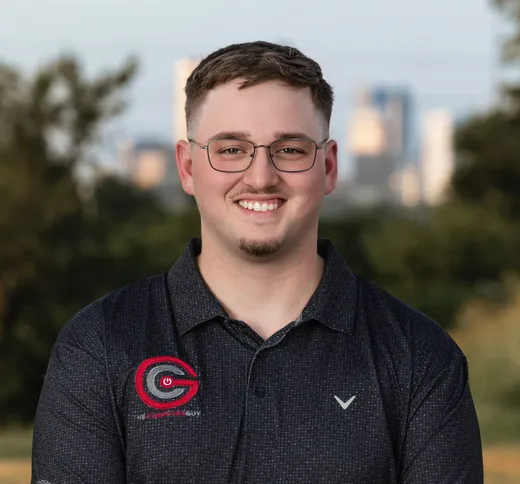 D.SWEET · CLEARANCE: CURIOUS
I'm Dalton. At The Computer Guy, I look after a whole portfolio of client businesses: Microsoft 365 tenants, FortiGate and UniFi networks, endpoint fleets in Datto RMM, and whatever lands in the queue at 2 a.m.
I came up through cybersecurity, with an associate's from Tulsa Community College and a bachelor's from Northeastern State University, and ran a managed services practice before my current role. That mix shapes how I work: think like a defender, build like an operator, and explain it in plain English.
Off the clock I build websites, tinker with PC hardware, and read far too much about cosmology and physics.
More about me →The work I do every day, across a wide mix of client environments.
When something looks wrong, I move fast. I've contained live social-engineering attacks before a payload ever ran, managed EDR across client fleets, and turned every incident into hardening.
Daily administration across multiple client tenants: Entra ID, Exchange Online, OneDrive migrations, and the DNS behind it all. SPF, DKIM and DMARC done right, so mail actually lands.
FortiGate firewalls managed as a fleet, plus UniFi gateways, switches and APs. VLAN design, secure remote access, Wi-Fi that holds up, and log forensics that can tell a bad config from a failing PSU.
Datto RMM components and PowerShell that deploy, patch and report silently, with custom status fields so nothing quietly falls through the cracks.
Assessments against NIST CSF 2.0, PCI DSS v4.0.1 and regulated-industry controls. I turn frameworks into plain-language fixes a business can act on.
I build too: client websites, Nexus on Cloudflare Workers, D1 and R2, and small tools like Zephyra that cut busywork for technicians.
The stack behind my day job at a Tulsa MSP, live. Click a node to see how I use it, or launch an attack and watch which layer stops it.
Four steps, replayed on a real incident: nine FortiGates that could reach FortiGuard but couldn't pull a single update. Scroll to run it.
Understand the environment before touching it: inventory, logs, and the people who actually use it.
Close the gaps that matter most first. Here that meant separating reachability from service health, layer by layer.
If I have to do it twice, I script it. One change, pushed across the fleet, with every device reporting back.
Leave it better than I found it: an SOP for the next tech and a plain-language summary for the client.
My heritage is Cherokee, and I'm from the Cherokee Nation in northeastern Oklahoma. It's part of how I see technology.
In 1821 Sequoyah finished something remarkable: a writing system for the Cherokee language, built from scratch, one character for each syllable. Within a few years thousands of Cherokee people were reading and writing it, and in 1828 the Cherokee Phoenix was printing the news in Cherokee and English.
That's the kind of system I admire most: built by someone who understood the people it was for, simple enough to learn quickly, and still in use two centuries later. The glyphs that flicker across this site as text decrypts are Sequoyah's syllabary.
The bright cluster in the corner of the sky is the Pleiades, ᎠᏂᏧᏣ Anitsutsa, the boys who danced their way into the sky. The pale band across it is the Milky Way: in Cherokee telling, the trail left where a dog ran off with stolen cornmeal. Hover or tap near them.
| a | e | i | o | u | v | |
|---|---|---|---|---|---|---|
| · | ||||||
| g | ||||||
| h | ||||||
| l | ||||||
| m | ||||||
| n | ||||||
| qu | ||||||
| s | ||||||
| d/t | ||||||
| dl/tl | ||||||
| ts | ||||||
| w | ||||||
| y |
Detailed write-ups of real engineering work. Customer details are withheld, and each one describes the work that was actually done.
FortiGate networks across many customer environments: IPsec to UniFi, VLAN segmentation, SAML remote access after firmware changes, and a FortiGuard connectivity incident on nine firewalls.
Independent Cloudflare-based SaaS: unified inboxes, calendar, tasks and follow-ups across work, family and personal contexts. Built on Workers, D1, R2 and Microsoft Graph.
Dropbox to SharePoint migration and Microsoft 365 collaboration setup, plus a separate 3 TB / 13-user modernization assessment comparing SharePoint, Azure Files and a hybrid design, with NAS preservation first.
Piling on security tools without a plan creates silos that hide risk and make audits painful. Here is why consolidation and integration matter more than another dashboard.
Too many vendors, logins and renewals slow an MSP down. A practical comparison of Kaseya 365 and Pax8, and which one fits which kind of shop.
Attackers rarely stop at the first machine they reach. How lateral movement works inside a network, and the controls that keep one compromise from becoming many.